

Table of Contents
- What Makes Pet Accessories Truly Eco-Friendly
- Sustainable Pet Beds: Natural Materials That Last
- Eco-Friendly Dog Toys That Engage and Endure
- Non-Toxic Pet Accessories for Peace of Mind
- Biodegradable Pet Products and Waste Solutions
- Choosing Eco-Friendly Pet Accessories: What to Look For
- Frequently Asked Questions
Last Updated: October 8, 2026
What Makes Pet Accessories Truly Eco-Friendly
Choosing eco-friendly pet accessories 2026 means looking beyond marketing claims. Real eco-friendly pet products use natural or recycled materials, avoid harmful chemicals, last for years, and biodegrade or recycle.
The difference between genuine sustainability and greenwashing is transparency. Look for manufacturers who explain their sourcing, production methods, and end-of-life disposal.
Durability matters. A toy lasting six months means replacing it twice a year, creating more waste than a well-made option that endures for years. When evaluating eco-friendly pet accessories, consider cost per use and lifespan, a higher upfront price often means fewer replacements.
| Material | Durability | Biodegradable | Best For |
|---|---|---|---|
| Natural Rubber | 2-3 years | Yes | Dog toys, chew toys |
| Recycled Materials | 3-5 years | Partial | Beds, accessories |
| Merino Wool | 4-6 years | Yes | Cat beds, bedding |
| Hemp Rope | 2-4 years | Yes | Toys, scratching posts |
Sustainable Pet Beds: Natural Materials That Last
Pet beds are one of the biggest opportunities to reduce your pet's environmental footprint. Unlike synthetic foam that sheds microplastics and takes decades to decompose, natural-material beds provide comfort with minimal harm.

Merino wool is the best natural material for pet bedding: temperature-regulating, naturally antimicrobial, and completely biodegradable. Wool beds keep cats warm in winter and cool in summer without electricity or synthetic gels, and resist dust mites naturally.
Merino Wool Beds for Cats
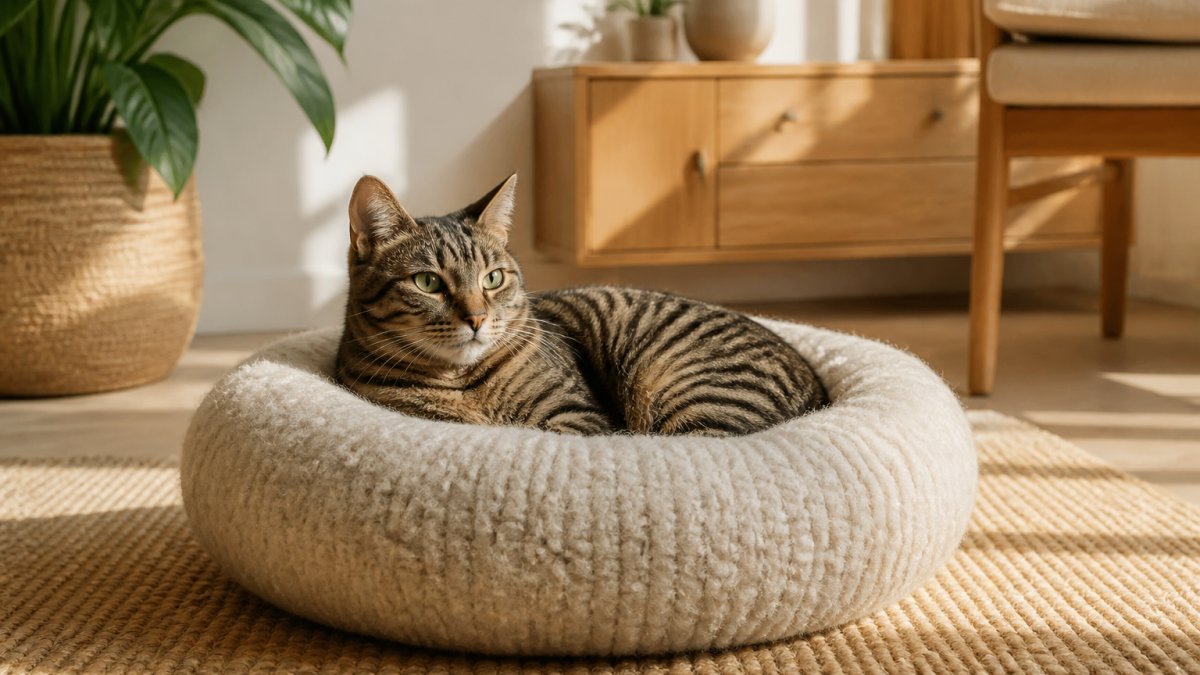
The Premium Felt Cat Bed Cave from PetNest Market uses 100% natural merino wool, hand-crafted into a cave-like hideaway cats instinctively seek out.

The merino wool construction keeps your cat comfortable year-round: insulation in winter, breathability in summer, plus natural dust- and odor-control that reduces washing.
Available in medium and large, the Premium Felt Cat Bed Cave accommodates cats up to 20 pounds.
The bed costs $49.78 for medium and $62.15 for large.
Eco-Friendly Dog Toys That Engage and Endure
Dogs need mental stimulation and physical activity, but most toys create waste within weeks. Eco-friendly dog toys pair durable, natural materials with designs that match how your dog actually chews, the wrong material for the wrong chewer is neither safe nor sustainable.
Match the material to the chewing style
Veterinarians and toy testers typically sort dogs into three chewing profiles before recommending a material:
- Light chewers (most senior dogs, toy breeds, and dogs that mouth rather than gnaw) do well with felted wool, organic cotton canvas, or soft hemp rope. These wear out from saliva and repeated washing before they wear out from force.
- Moderate chewers (most adult retrievers, herders, and terriers) need natural rubber with some give, tightly braided hemp, or dense felted wool. These resist compression without being hard enough to chip a tooth.
- Power chewers (some pit-bull-type dogs, Rottweilers, and other strong-jawed breeds) are the hardest group to serve sustainably. Very hard natural rubber, thick natural-fiber rope, or solid untreated hardwood are the usual recommendations. Anything softer becomes a swallowing hazard within minutes.
Rule of thumb: if a fingernail leaves a dent, it is too soft for a power chewer; if it feels like a rock and does not flex, it is too hard for most dogs and risks enamel fractures.
What to look for, and what to avoid
| Feature | Why it matters |
|---|---|
| Solid natural rubber | Flexes under pressure, no internal parts to swallow, biodegrades slowly over years |
| Tightly braided hemp or natural-fiber rope | Strong, biodegradable, naturally antimicrobial; check for loose end threads |
| Untreated hardwood (e.g., coffee wood) | Long-lasting for power chewers; must be a single solid piece, not glued |
| Vegetable-tanned leather | Durable and compostable; avoid chrome-tanned leather |
| Plant-based dyes | Reduces chemical exposure if the toy is mouthed or chewed |
Avoid toys with plastic squeakers, glued-on eyes, or synthetic noisemakers, these become choking hazards and cannot be separated for recycling. Stuffing hides internal components and creates a mess when the toy is destroyed. Solid toys without internal components are safer and easier to dispose of.
Durability, cost per use, and replacement frequency
Eco-friendly toys usually cost more upfront, so compare cost per use rather than sticker price:
- A $20 synthetic plush toy that a moderate chewer destroys in three weeks costs roughly $1.10 per week of use.
- A $28 natural rubber toy that lasts eight months costs roughly $0.80 per week of use, and produces one disposal event instead of about a dozen.
Natural rubber and dense felted wool typically last 6-18 months for moderate chewers, braided hemp rope 3-9 months, and untreated hardwood 1-3 years for power chewers. Treat these as planning ranges, not guarantees.
End-of-life: what actually happens to a worn-out toy
Natural rubber, hemp, untreated wood, and wool break down in a home compost pile over months to a few years, a real advantage over synthetic rubber and plastic, which persist for decades. Two caveats:
- Mixed-material toys rarely biodegrade cleanly. A rope toy with a plastic core, or a rubber toy with a squeaker, has to be landfilled because the components cannot be separated.
- Take-back programs are still rare. A handful of brands accept worn toys for recycling or credit, but most do not. Before buying, check whether the manufacturer publishes an end-of-life option, if they do not, plan on home composting or landfill.
The most sustainable dog toy is the one your dog can safely use for the longest time. Match the material to your dog's chewing style first, then compare cost per use and end-of-life options, not the other way around.
Non-Toxic Pet Accessories for Peace of Mind
Beds, collars, toys, and grooming products touch your pet's skin and mouth daily.
Synthetic dyes, flame retardants, and plasticizers can accumulate in your pet's body over time.
Check for certifications verifying non-toxic manufacturing, and look for products explicitly free from harsh chemicals, synthetic dyes, and harmful additives.
Premium Felt Cat Bed Cave (Medium) - Handmade 100% Merino Wool Bed for Cats →
Grooming products deserve the same scrutiny. Shampoos and wipes should use natural, plant-based ingredients rather than synthetic surfactants and fragrances, your pet's skin absorbs whatever touches it.
Biodegradable Pet Products and Waste Solutions
Pet waste is one of the largest environmental impacts of pet ownership. The U.S. Environmental Protection Agency notes that waste left on the ground can wash into storm drains and add nutrients and bacteria to waterways, so picking it up matters regardless of the bag. The bag itself is a separate question, and labels are frequently misleading.
Biodegradable vs. compostable vs. plant-based: what the words actually mean
These three terms get used interchangeably in marketing, but they describe different things:
- Plant-based (bio-based) means the plastic is made from plants such as corn starch, sugarcane, or wheat. It says nothing about whether the bag will break down. A bio-based bag can behave exactly like conventional plastic in a landfill.
- Biodegradable means the material will break down over time through biological processes. The catch: there is no fixed timeline, no required testing standard for pet waste bags in the U.S., and 'biodegradable' in a sealed landfill can take decades because the microbes and oxygen needed for breakdown are not present.
- Compostable is the strongest claim. In the U.S., the recognized third-party certifications are BPI (Biodegradable Products Institute) Compostable and TÜV OK Compost. Both require the product to break down within a defined timeframe under specific conditions and to leave no toxic residue. If a bag does not carry one of these marks, 'compostable' is a marketing word, not a verified claim.
The composting reality check
Most curbside composting programs in the U.S. do not accept pet waste, even in certified compostable bags. Pet waste can carry parasites such as roundworm and Toxocara that survive typical backyard composting temperatures, and many municipal programs are not set up to handle them.
That leaves three realistic disposal paths:
- Trash (most common). Even a certified compostable bag goes to landfill for most households. The environmental benefit is smaller than the label implies, but plant-based bags still reduce fossil-fuel feedstock compared with conventional polyethylene.
- Backyard composting (limited). Only safe if you run a dedicated pet-waste compost system that reaches sustained high temperatures, keep it separate from food-crop compost, and cure it for an extended period. Many home composters are not set up for this, and the resulting compost should not go on vegetable gardens.
- Municipal or commercial composting (rare). A small number of programs accept pet waste. Check your local hauler's accepted-materials list before assuming your bag qualifies.
Beyond bags: the rest of the waste stream
Waste bags are the visible item, but not the only disposable in a pet household. The same verification logic applies across the category:
| Product | What to verify |
|---|---|
| Poop bags | BPI or TÜV OK Compost mark; thickness (thicker bags use more material per pickup) |
| Pet wipes | Plant-based fiber, no synthetic fragrance, no plastic microfibers |
| Litter box liners | Certified compostable or paper-based; check whether your litter itself is compostable |
| Cat litter | Plant-based (wood, corn, wheat, paper) vs. sodium bentonite clay, which is strip-mined |
| Food containers | Recyclable metal or glass over composite laminates |
A note on 'flushable'
Some cat litter and bags are marketed as flushable. Most wastewater agencies advise against flushing cat waste: parasites it carries survive typical treatment, and 'flushable' wipes and bags have contributed to sewer blockages. The safer default is the trash, even for compostable products.
Households with access to a commercial composting program that accepts pet waste should prioritize BPI-certified compostable bags. Everyone else gets the most real-world benefit from plant-based bags used in the trash, combined with reducing the total number of bags by using a single larger bag per walk rather than one bag per pickup.
Reducing the waste stream before it starts
The most sustainable waste bag is the one you do not need. Practical reductions in low-waste pet households:
- Use a reusable, washable scoop or bin for yard cleanup instead of a bag per deposit.
- Switch to a plant-based litter that can be composted (where local rules allow) or that breaks down faster in landfill than clay.
- Buy the largest bag roll that fits your dispenser to cut packaging per bag.
'Biodegradable' on a pet waste bag is not a verified claim in the U.S. The only marks that carry third-party testing are BPI Compostable and TÜV OK Compost. Even then, most curbside programs reject pet waste, so the honest answer for most households is: plant-based bag, trash can, and reduce the number of bags you use.
Choosing Eco-Friendly Pet Accessories: What to Look For
Making informed choices about eco-friendly pet accessories means evaluating factors beyond marketing language.
Material sourcing matters most. Ask where materials come from and how they're processed.
Safety certifications provide assurance. Look for products tested for harmful substances and certified non-toxic.
At PetNest Market, we curate products meeting these standards.
Choosing eco-friendly pet accessories reflects your commitment to your pet's wellbeing and the environment.
Frequently Asked Questions
What are the best eco-friendly pet accessories in 2026?
The best eco-friendly pet accessories combine sustainable materials with durability and safety. Look for products made from natural materials like merino wool, recycled rubber, and hemp rope that are free from harmful chemicals. Cat beds handcrafted from 100% merino wool offer temperature regulation and comfort while being fully decomposable. For dogs, toys made from natural rubber or recycled materials provide safe chewing options. Biodegradable waste bags and organic grooming products round out a truly sustainable pet care routine.
How can I tell if a pet product is truly sustainable?
Verify sustainability by checking material sourcing, manufacturing transparency, and third-party certifications. Genuine eco-friendly pet accessories are made from clearly identified natural or recycled materials without synthetic additives or harsh chemicals. Look for products that disclose their lifecycle impact and disposal guidance. Handcrafted items from responsible manufacturers often provide detailed care instructions, indicating longevity and proper maintenance. Avoid vague marketing claims like 'eco-friendly' without specific material or sourcing information backing them up.
Are eco-friendly dog toys and cat products safe?
Yes, when sourced properly. Eco-friendly dog toys made from natural rubber, hemp rope, and recycled materials are safe when they're free from toxic dyes and adhesives. Cat beds made from 100% merino wool are naturally hypoallergenic and non-toxic. Safety depends on manufacturing standards, not whether a product is eco-friendly. Always verify that products have no harmful chemicals, are appropriately sized for your pet to prevent choking, and are designed for their specific use. Reputable brands provide detailed material specifications and safety information.
What's the cost difference between eco-friendly and conventional pet accessories?
Eco-friendly pet accessories often cost more upfront but deliver better long-term value. A premium merino wool cat bed costs $49.78-$62.15 and lasts for years with proper care, while cheaper synthetic beds require frequent replacement. Calculate cost per use over the product's lifetime: a durable eco-friendly toy used for 12 months may cost less than buying three conventional toys annually. Sustainable products reduce waste and environmental impact, offsetting the initial premium for conscious pet parents.