

Table of Contents
- Why Grooming Wipes Calm Dogs (and When They Don't)
- What You'll Need Before You Start
- How to Use Pet Wipes on Dogs: A Low-Stress Step-by-Step Routine
- Dog Grooming Anxiety Tips for Nervous Dogs
- Areas to Avoid and Safe Wiping Technique
- How to Choose the Best Grooming Wipes for Dogs
- How to Clean a Dog Without a Bath Using Wipes
- When to Stop and Call Your Vet
- Frequently Asked Questions
Last Updated: October 17, 2026
Why Grooming Wipes Calm Dogs (and When They Don't)
Grooming wipes are pre-moistened cloths made for cleaning a dog's coat, paws, and skin without water.
That second part matters more than most owners realize. A dog that itches constantly is a dog that never fully settles.
But wipes are not a sedative, and they are not a fix for fear. If your dog panics at the sight of a wipe, the wipe isn't the problem.
The Difference Between Soothing Skin and Easing Fear
These are two separate jobs, and mixing them up wastes time.
Soothing skin is a physical result.
Easing fear is a training result. A nervous dog needs slow, predictable handling and rewards.
Here's the part most guides skip: a dog that hates being touched will fight the wipe no matter how good the formula is.
What You'll Need Before You Start
Set up before your dog enters the room. Fumbling for supplies mid-wipe is what turns a calm moment into a chase.
- Pet wipes made for dogs, not human baby wipes
- A towel for drying damp fur
- Treats your dog actually loves, cut small
One more thing: check the label before the first use. You want alcohol-free and free of harsh fragrances. More on formula selection below.
How to Use Pet Wipes on Dogs: A Low-Stress Step-by-Step Routine
Most guides tell you to "wipe gently and reward." That is not a routine, it is a hope.
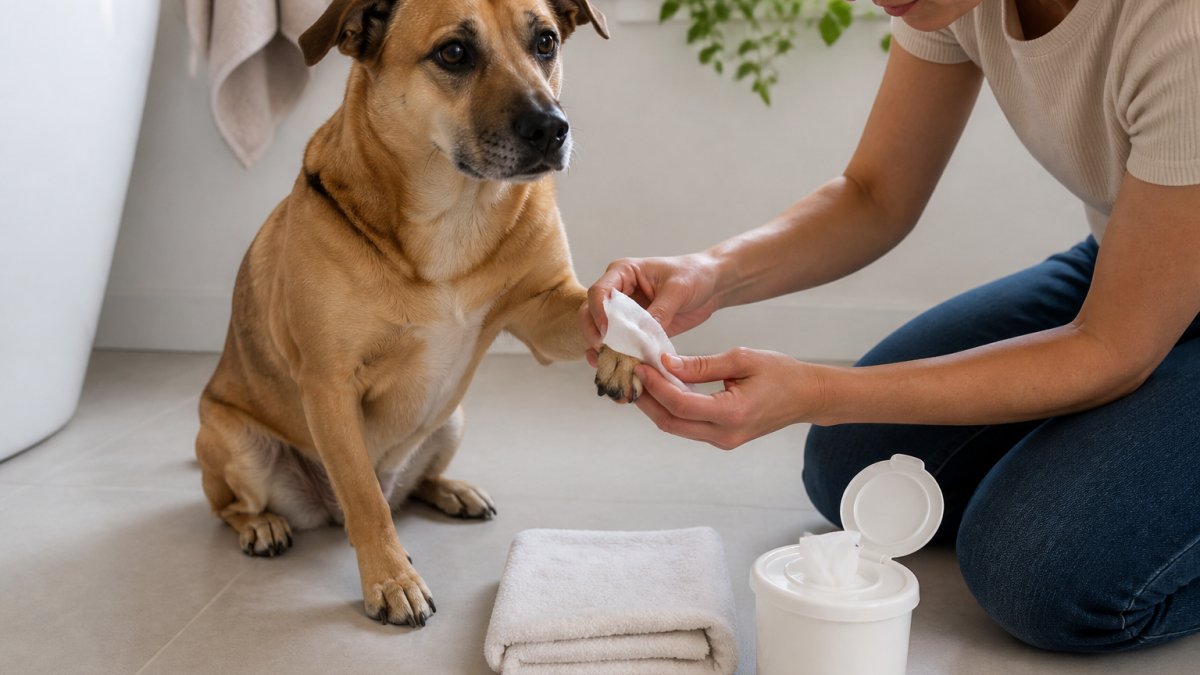
Step 1: Set the Room Before the Dog Enters
Close the door, lay down a non-slip mat, and put the wipe container on the floor with the lid closed. Let your dog walk in and investigate on their own.
Do not open the container yet. If your dog is pacing, panting, or trying to leave, stop here and end the session with a treat.
Step 2: Do a Two-Second Test Wipe
Open the container, pull one wipe, and let your dog sniff it. Then wipe one paw for about two seconds, one pass in the direction the fur grows, and stop. Treat immediately.
This is the whole first session for a fearful dog. You are teaching one lesson: wipe, then treat, then done. Resist the urge to "finish the job." The job is trust, and it is built in seconds, not minutes.
Step 3: Work Paws to Face in the Same Order Every Time
Once your dog accepts a two-second paw wipe without pulling away, extend to a full paw, then the other three, then legs, underbelly, chest, and face. Keep the order fixed: paws, legs, underbelly, chest, face. Paws first because most dogs tolerate them best, and a good start builds momentum for the rest.
- Pull one wipe out and close the container so your dog cannot grab the stack
- Hold the paw gently and wipe in the direction the fur grows
- Use a fresh wipe for the face, always
Step 4: Read the Pause Signals and Stop Early
A dog does not usually bite without warning. The warnings are small and easy to miss if you are focused on the wipe. Pause and reassess if you see:
- Lip licking when there is no food around
- Yawning out of context
- Turning the head away or freezing mid-motion
Two or more of these at once means end the session now. One means slow down and add a treat. Never push through a signal to "get it over with", that is how a dog learns the wipe predicts something bad.
Step 5: End on a Good Note, Not a Finished Job
Stop while your dog is still doing well. Ending early on a good note beats pushing through one more paw and creating a bad memory. Put the container away, give a final treat, and let your dog leave the room on their own feet.
The Fallback When Your Dog Refuses
If your dog will not accept even a two-second paw wipe after several sessions, the wipe is not the right tool yet. Switch to a warm, damp washcloth for a week, it is softer, quieter, and has no container sound, and practice touching one paw with the cloth for one second, then treating. Once that is easy, return to the wipe.
Dog Grooming Anxiety Tips for Nervous Dogs
A fearful dog needs a different pace, not a different wipe. This is the part most grooming articles skip: a gentle formula soothes skin, but it does nothing for fear. Calming a dog during wiping is a training job, and it follows the same rules as any other desensitization work, small steps, predictable order, and rewards that arrive before the dog has a chance to worry.
Set Realistic Expectations First
A soothing, unscented wipe can reduce itch and irritation over hours and days. It will not calm a dog in seconds, and no wipe on the shelf is a sedative. If your dog's anxiety is severe, hiding, growling, snapping, or freezing at the sight of the container, the wipe is not the first problem to solve.
The Slow Version: A Two-Week Desensitization Schedule
This is the pace that works for most nervous dogs. Adjust it to your dog; there is no prize for finishing faster.
- Days 1-2: Container closed on the floor. Let your dog investigate. Treat any calm sniff. No wiping.
- Days 3-4: Container open, wipe in hand, let your dog sniff the wipe. Treat. Still no wiping.
- Days 5-6: One two-second paw wipe, then treat and stop. One area per session.
If your dog regresses at any step, go back one step for two sessions. Regression is information, not failure.
Read the Body Language Before the Wipe Comes Out
Watch for these stress signals and pause when you see them:
- Lip licking when there's no food around
- Yawning out of context
- Turning the head away or freezing
If your dog shows two or more of these, end the session. Try again tomorrow with less ground to cover. One signal means slow down and add a treat.
Wipes Versus Other Calming Methods
A soothing wipe formula is not a calming method in the behavioral sense. If wiping itself raises your dog's stress, the wipe is the wrong tool for that moment. Alternatives worth trying:
- A warm, damp washcloth for spot cleaning, quieter and softer than a wipe
- A lick mat or frozen treat during handling to redirect attention
- A treat scatter on the floor before and after the session
Use wipes for what they are good at, lifting dirt and allergens off the coat, and use training for what wipes cannot do. When both are working, a dog that used to dread the container will start walking toward it.
Areas to Avoid and Safe Wiping Technique
Some spots need care, and a few need to be left alone entirely.
- Eyes: wipe around the eye with a clean corner, never across the eyeball
- Ears: clean the outer flap only, never push a wipe into the ear canal
- Nose: avoid the nostril openings
- Mouth: skip it unless your vet recommends a specific product
Use light pressure. You're lifting dirt, not scrubbing it in. One pass in the direction of the fur is enough for most cleanup.
How to Choose the Best Grooming Wipes for Dogs
The best grooming wipes for dogs are alcohol-free, unscented or lightly scented, and labeled for canine use. That's the short answer. The longer answer depends on your dog's skin.
Read the ingredient list and look for gentle cleansers and soothing ingredients. Skip anything with alcohol, strong perfume, or dyes. Human baby wipes are not a substitute, since some contain ingredients dogs shouldn't lick.
Matching Wipes to Sensitivities
Different dogs need different formulas. Here's how we'd sort it:
| Dog's Situation | What to Look For | What to Avoid |
|---|---|---|
| Normal skin, routine cleanup | Gentle everyday formula | Heavy fragrance |
| Sensitive or itchy skin | Soothing, unscented formula | Alcohol, dyes |
| Skin folds and wrinkles | Soft cloth, gentle cleanser | Harsh scrubbing |
| Medicated need (vet-directed) | Vet-recommended medicated wipes | DIY alternatives |
Always patch test first. Wipe a small area on the back leg, wait a day, and check for redness or scratching. If you see a reaction, stop and ask your vet.
How to Clean a Dog Without a Bath Using Wipes
Wipes handle the in-between days: muddy paws after a walk, a dirty underbelly, or a quick face cleanup. They are not a bath replacement, and they shouldn't be.
Use them for spot cleaning and daily freshness. For a full coat clean, a bath is still the better tool.
For more on building a full grooming routine, the ASPCA's dog grooming guidance covers coat care basics. And the AVMA's pet care resources explains when skin issues need a vet's eye rather than a wipe.
When to Stop and Call Your Vet
Stop wiping and call your vet if you see any of these:
- Redness, swelling, or hives after wiping
- Constant scratching at one spot
- Hair loss or broken skin
- A bad smell that returns quickly
These can point to allergies, infection, or parasites that wipes won't fix. Skin problems that don't clear up in a few days need a professional look, not a stronger wipe.
Frequently Asked Questions
How do you introduce grooming wipes to a nervous dog?
Start without wiping. Let your dog sniff the closed package, then an open wipe, and reward calm behavior with a treat. Touch the wipe to a neutral spot like the shoulder for one second, then reward. Build up to longer contact and new areas over several short sessions. Pair every wipe with a treat so the wipe predicts something good. If your dog flinches, backs away, or freezes, stop and try again later with smaller steps.
Which areas of a dog should you avoid wiping?
Skip the inside of the ears, the eyes themselves, and the nose. Never push a wipe into the ear canal; clean only the outer flap with a wipe made for that purpose. Wipe around the eyes with a damp cloth rather than rubbing the eye. Use gentle pressure on the face, underbelly, and skin folds, and stop if your dog shows pain. If you see redness, discharge, or a bad smell, ask your vet before continuing.
How often can you use grooming wipes on a dog?
Daily wiping is fine for most dogs when you use a dog-safe, alcohol-free wipe and the skin stays healthy. Paws after walks and the face after meals are the most common daily spots. Full-body wipe-downs work well between baths, often once or twice a week. Watch for dry, red, or itchy skin; if it appears, cut back and check with your vet. Wipes support a grooming routine, they do not replace regular baths or professional grooming.
What can I wipe my dog down with if I run out of wipes?
A damp washcloth with plain water works for a quick touch-up, especially on paws and the face. Avoid human baby wipes, which can contain fragrances and alcohol that irritate a dog's skin. Never use household cleaning wipes. If you need a deeper clean, a small amount of dog-safe shampoo on a damp cloth followed by a plain-water rinse is safer than improvising with human products. Restock dog grooming wipes so you are not caught without them.
Calming a nervous dog during grooming takes patience, the right tools, and a routine your dog can predict. At PetNest Market, we stock gentle grooming wipes and calming essentials chosen with anxious dogs in mind. Our Quality Guaranteed and Happy Pets Promise mean you can try a formula with confidence, and free shipping on orders over $50 makes stocking up simple. Search our grooming collection and build a low-stress routine your dog can trust.