

Table of Contents
- Essential Supplies for First Time Puppy Owners: A Complete Checklist
- Feeding and Nutrition Essentials
- Crate Training and Sleeping Areas
- Puppy Crate Training Schedule and Getting Started
- Leash, Collar, and Safe Chew Toys
- How to Stop Puppy Chewing Furniture and Redirect Behavior
- Puppy Proofing Checklist for Your Home
- Grooming, Health, and Hygiene Tools
- Frequently Asked Questions
Last Updated: September 23, 2026
Essential Supplies for First Time Puppy Owners: A Complete Checklist
Bringing home your first puppy is an exciting adventure, but it can also feel overwhelming. If you're a first time puppy owner, getting the right supplies is crucial for a smooth transition. The essential supplies for first time puppy owners fall into seven core categories: food and water, sleeping spaces, training equipment, toys, grooming tools, health items, and home safety gear. Prioritizing these items ensures your puppy thrives. Miss out on them, and you may be faced with preventable issues.
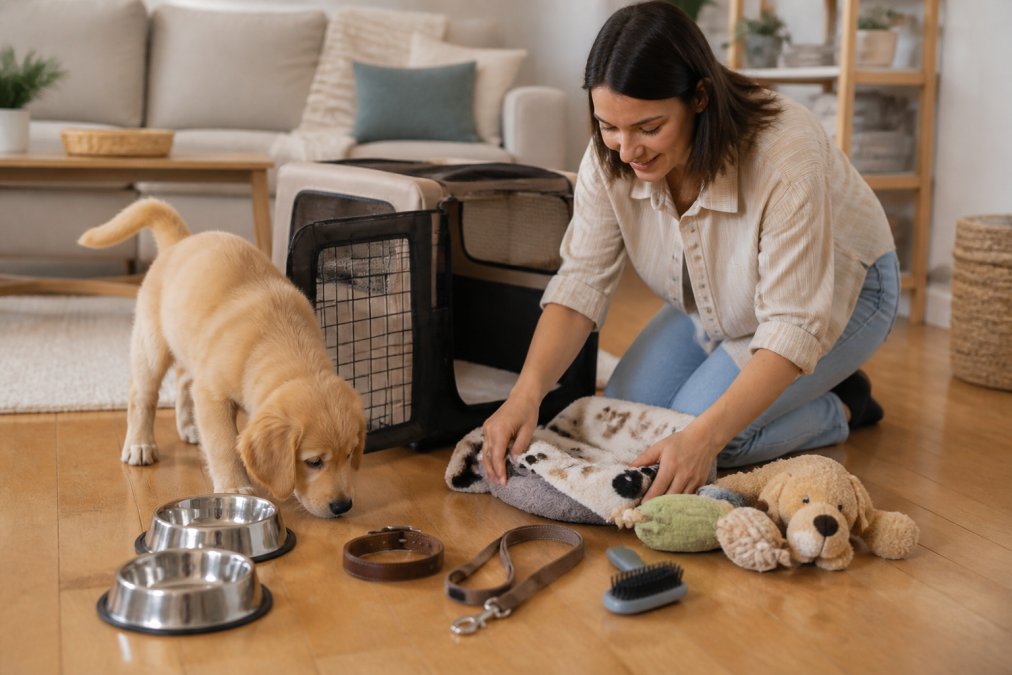
This guide covers everything you need to buy before your puppy arrives, plus what can wait. We'll also show you how to avoid common mistakes that waste money and create behavior problems later.
Feeding and Nutrition Essentials
Your puppy's diet is a fundamental aspect of healthy growth and development. High-quality kibble designed specifically for puppies is essential. Adult food lacks the right nutrient balance for developing dogs. Choose a premium formula based on your puppy's expected adult size. Look for meat as the first ingredient and ensure it meets the Association of American Feed Control Officials guidelines for "growth" or "all life stages".
For example, PetNest Market offers the Merrick Healthy Grains Dry Dog Food Small Breed Recipe, which contains real deboned chicken as the main ingredient and supports joint and digestive health. This product ensures you are on the right path as a first time puppy owner.

In addition to kibble, you will need stainless steel food and water bowls. Avoid plastic, as it can harbor bacteria and may not withstand a puppy's chewing. Choose appropriately sized bowls; oversized bowls can lead to gulping and bloating. Consider a slow feeder bowl if your puppy eats too quickly. Training treats will also be essential for positive reinforcement during training.
| Feeding Item | Purpose | Priority |
|---|---|---|
| High-quality puppy kibble | Foundation nutrition for growth | Essential |
| Stainless steel bowls | Safe, durable feeding | Essential |
| Training treats | Positive reinforcement | Essential |
| Slow feeder bowl | Prevents bloating | Optional |
| Water fountain | Encourages hydration | Optional |
Crate Training and Sleeping Areas
A crate is not a punishment; rather, it serves as a safe haven for your puppy. Proper crate training can significantly aid in preventing destructive behavior and expedite potty training, ultimately creating a more harmonious home environment for both you and your new companion. As part of essential supplies for first time puppy owners, invest in a crate that allows your puppy to stand, turn around, and lie down comfortably.
Choosing the right crate size is vital. If too large, your puppy may use one corner as a bathroom; if too small, they'll feel confined and stressed. The American Kennel Club suggests starting crate training with short durations, gradually increasing the time as your puppy becomes accustomed. Consider products such as the Portable Soft Collapsible Dog Crate available at PetNest Market, which is designed for both indoor and outdoor use.

Puppy Crate Training Schedule and Getting Started
Understanding how frequently your puppy needs breaks is essential for successful crate training. Puppies can typically hold their bladder for about one hour per month of age. Therefore, a three-month-old puppy will need a potty break every three to four hours.
Leash, Collar, and Safe Chew Toys
As a first time puppy owner, investing in a properly fitted collar and leash is non-negotiable. The collar should be snug enough that you can fit two fingers underneath it. An incorrect fit can lead to your puppy slipping free or restricting their breathing. Additionally, providing safe chew toys will help manage your puppy’s natural urge to chew and prevent unwanted destruction.
How to Stop Puppy Chewing Furniture and Redirect Behavior
Puppy chewing is often a sign of frustration rather than spitefulness. Your puppy may be teething, bored, or anxious. Simply punishing them is ineffective, as your puppy may not understand the reasoning behind it. To curtail this behavior, channel their energy towards appropriate resolutions—including providing chew toys and regular exercise. A simple two-minute session of play or a short walk can significantly reduce destructive behavior.
Puppy Proofing Checklist for Your Home
Puppy-proofing is essential to avoid accidents and injuries. Curious puppies can easily get into hazardous situations if not properly supervised. Here are some items to remove or secure:
- Electrical cords and cables
- Toxic plants (such as lilies, sago palms, chocolate, grapes, onions, xylitol)
- Small objects that fit into a puppy's mouth
- Cleaning supplies and medications
- Trash cans
- Loose wires and phone chargers
- Anything with small parts that detach
| Hazard | Risk | Solution |
|---|---|---|
| Electrical cords | Electrocution | Secure or cover with cord protectors |
| Toxic plants | Poisoning | Remove or place in high, unreachable areas |
| Small objects | Choking/blockage | Store in closed containers |
| Stairs | Falls and injury | Use baby gates |
| Unsecured trash | Toxins/blockage | Use locking cans or gate off kitchen |
| Yard gaps | Escape | Inspect and repair fencing |
Grooming, Health, and Hygiene Tools
Grooming is not just about aesthetics; it is a vital aspect of maintaining your puppy's health. Regular grooming prevents mats, reduces shedding, and helps identify skin problems early. Nail trimming is essential to avoid painful overgrowth and joint issues. Proper ear cleaning can also prevent infections that are common in breeds with floppy ears.
Frequently Asked Questions
What are the absolute must-have supplies for a new puppy?
Every new puppy needs food and water bowls, high-quality puppy kibble, a crate for training and safety, a comfortable bed, a collar and leash, ID tags, chew toys, grooming supplies, and cleaning products for accidents. Beyond basics, consider a puppy playpen for safe containment, teething toys to redirect chewing, and enzyme cleaner for thorough potty training cleanup. Start with these essentials and add enrichment items like puzzle toys as your puppy grows.
How do I puppy-proof my home before bringing a new dog home?
Begin with a puppy proofing checklist: secure electrical cords, remove toxic plants, store chemicals and medications out of reach, use baby gates to block dangerous areas, and protect furniture with deterrent sprays. Remove small objects that pose choking hazards, cover trash cans, and ensure your yard is securely fenced. Establish a designated potty area and place puppy pads in training zones. Check for gaps where puppies could escape and remove anything you don't want destroyed, since puppies naturally explore their environment through chewing and play.
What is the best crate size for a growing puppy?
Choose a crate where your puppy can stand, turn around, and lie down comfortably without excess space. A crate that's too large encourages puppies to potty in one corner and sleep in another, defeating training goals. Many owners use a divider panel in a larger crate to adjust space as the puppy grows, or start with a smaller crate and upgrade as needed. Soft collapsible crates work well for travel and flexibility, while hard plastic or wire crates offer durability for long-term use.
How can I stop my puppy from chewing furniture?
Redirect chewing to appropriate toys by providing teething toys, durable chew items, and squeaky toys that hold your puppy's interest. Use chew deterrent sprays on furniture legs and corners. Supervise closely and interrupt unwanted chewing immediately, then offer a proper toy instead. Ensure your puppy gets enough physical exercise and mental stimulation through play and training. Crate training helps prevent destructive chewing when you can't supervise, while providing safe, designated chew toys teaches your puppy what's acceptable to bite.
What supplies do I need for puppy potty training?
Stock puppy pads, enzyme cleaner, and a pooper scooper for outdoor cleanup. Enzyme cleaners are essential because they break down urine and feces at a molecular level, removing scent markers that encourage repeat accidents. Use potty pads in designated training areas indoors and reward successful outdoor elimination with training treats. Keep cleaning supplies accessible for quick cleanup of accidents. A portable pooper scooper with bags makes outdoor potty breaks easier and helps maintain hygiene during walks.
Do I need special grooming supplies for a puppy?
Yes. Puppies benefit from a soft grooming brush suited to their coat type, nail clippers or a grinder, and puppy-safe shampoo. Regular brushing reduces shedding, prevents matting, and helps your puppy get comfortable with handling. Start grooming early to build positive associations. You'll also need dental care items like a soft toothbrush and dog toothpaste to establish healthy habits. Ear cleaning supplies and paw care tools round out a basic grooming kit for first-time owners.
Is it worth buying premium puppy food over budget options?
Premium puppy food often contains higher-quality protein sources and digestible ingredients that support growth and development better than budget alternatives. High-quality kibble like Merrick Healthy Grains Small Breed Recipe features real deboned chicken as the first ingredient, added glucosamine for joint support, and omega fatty acids for coat health. While premium food costs more upfront, better digestion means less waste and potentially fewer vet visits. Choose food formulated for your puppy's size and age, and transition gradually to avoid digestive upset.
Welcoming home your first puppy is a big responsibility, and securing the right essential supplies for first time puppy owners is key. PetNest Market provides a curated selection of expert-backed items from premium nutrition to essential training equipment, all available in one convenient place. With our Quality Guaranteed promise and free shipping on orders over $50, you can focus on what really matters: forging a strong bond with your new furry friend. Start your journey with PetNest Market and give your puppy the wonderful beginning they deserve.