

Table of Contents
- Best Orthopedic Dog Beds for Senior Dogs: Quick Comparison
- Our Top Picks for Best Dog Beds for Senior Dogs
- Orthopedic Dog Bed Buying Guide: Foam, Fit, and Support
- How Long Should a Good Orthopedic Dog Bed Last?
- Washable Dog Beds for Older Dogs: Cleaning and Odor Control
- How We Evaluated Durability and Support
- Which Bed Should You Pick? A Decision Framework
- Frequently Asked Questions
Last Updated: October 18, 2026
Best Orthopedic Dog Beds for Senior Dogs: Quick Comparison
Finding orthopedic dog beds that actually hold up for senior pets comes down to foam quality, washability, and how easily an aging dog can get in and out. Below, we break down which beds in our collection earn their place, how long a good one should last, and how to match foam and fit to your dog's sleeping style.
| Bed | Price | Best For | Standout Feature |
|---|---|---|---|
| Rectangle Bolster Pet Bed | $36.17 | Best overall value | Reversible micro-mink and suede cover |
| Dog Bolster Pet Cot | $130.21 | Large breeds, mobility | Holds over 200 lb, 7-inch clearance |
| Deluxe Dog Car Seat Bed | $241.95 | Traveling seniors | Anti-slip base and safety straps |
Our Top Picks for Best Dog Beds for Senior Dogs
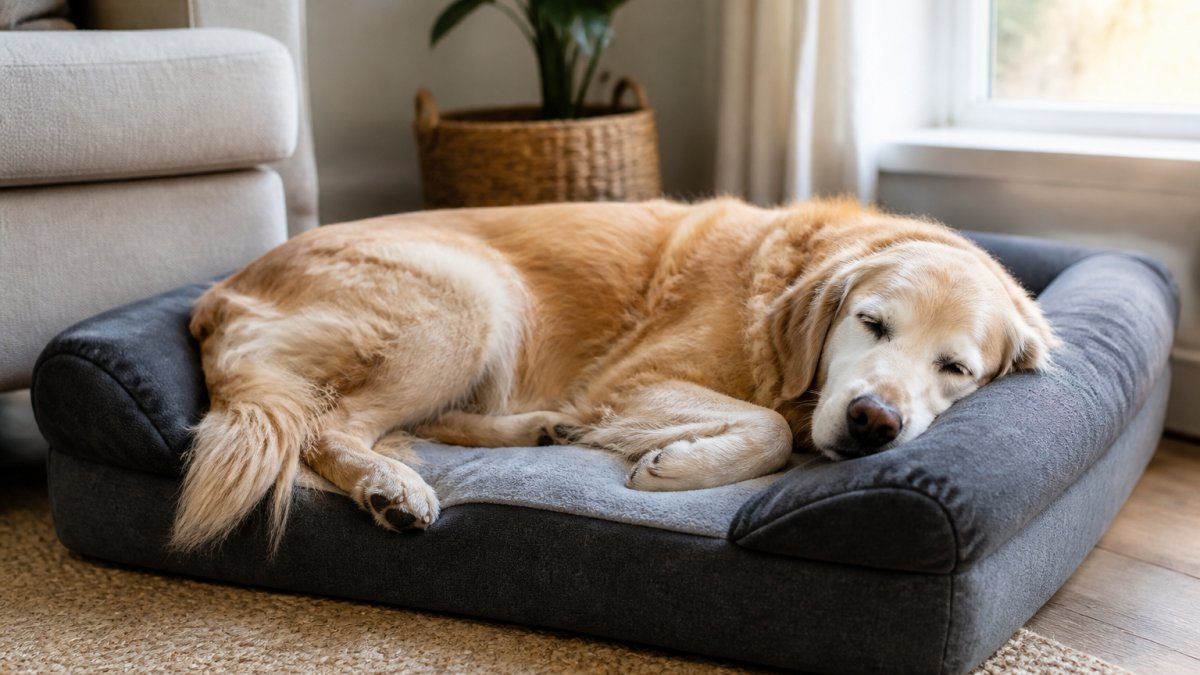
Each pick below solves a different problem. One is a budget-friendly starter bed, one handles big dogs and hot weather, and one keeps seniors secure in the car.

Rectangle Bolster Pet Bed, Dog Bed Medium Size: Best Value Orthopedic Bed
This is the bed we recommend first for most senior dogs.
The cover is reversible: micro-mink polyester on one side, suede on the other. The orthopedic foam zips out from the bottom, and the whole cover goes in the washing machine once the foam is removed.
Where it falls short: the medium size suits small to mid-size dogs, not a 90-pound shepherd. Large-breed owners should look at the cot below.
Dog Bolster Pet Cot Outdoor Dog Bed: Best for Large Breeds and Mobility
For big dogs and dogs that overheat, an elevated cot beats foam.
The plush bolster is removable, converting it into a flat cot in seconds. That matters for seniors with arthritis: a flat, stable surface is easier to step onto than a deep cushioned nest.
The honest trade-off is price at $130.21 and less pressure relief than memory foam. If your dog has thin hips and elbows, pair the cot with a blanket for cushioning.
Deluxe Dog Car Seat Bed: Best for Traveling Seniors
Vet visits and road trips are hard on arthritic joints. This car seat bed at $241.95 gives large dogs a thick backrest and cushion, an anti-slip bottom, and safety straps to keep it planted through turns.
The removable, washable cover handles accidents on the road, and the bed doubles as a lounge chair at home. It is the most expensive pick here, so reserve it for dogs that ride often.
Orthopedic Dog Bed Buying Guide: Foam, Fit, and Support
An orthopedic dog bed is a bed built with dense foam that distributes a dog's weight and reduces pressure on hips, elbows, and joints. The foam is the whole point, so check three things before buying, then go further than the standard advice, because fit and access matter as much as foam for a senior dog.
- Foam thickness and density: Thicker, denser foam resists compression. Thin foam flattens fast under a heavy dog.
- Weight distribution: A dog's weight should spread across the surface, not sink into one spot.
- Entry height: A low bolster or flat edge helps dogs with limited mobility get in without help.
Size by sleeping style, not just weight labels
Broad size labels (small, medium, large) tell you almost nothing about whether a senior dog will actually use the bed. Measure your dog while asleep, in the position they actually sleep in:
- Curled sleepers need less length but more width, measure nose to tail base in a curl and add about 6 inches on each side.
- Sprawlers need length for a fully stretched body; measure nose to tail tip while stretched and add 6 inches per side.
- Flat sleepers do best on a cot or flat orthopedic pad with no walls, like the Dog Bolster Pet Cot with its bolster removed.
If your dog is between sizes, size up. A cramped bed defeats the purpose of orthopedic support because the dog cannot fully unload pressure on the joints.

Accessibility and home setup for dogs with severe mobility limits
For a dog that struggles to stand or walk, where the bed sits matters as much as what it is made of:
- Entry height: A flat cot or a bed with a low, fold-down bolster is easier to step onto than a deep cushioned nest. The cot's 7-inch clearance and removable bolster make it the lowest-barrier option here.
- Floor grip: An anti-slip base (like the Deluxe Dog Car Seat Bed's) keeps the bed from sliding when a weak dog pushes off it.
- Stability: A bed that shifts or rocks under a standing dog is a fall risk. Test it on your actual floor before committing.
Cleaning and accident protection beyond the cover
A removable, washable cover is the minimum, not the whole answer. For incontinent seniors, look for a waterproof liner between the cover and the foam, or add a waterproof blanket as a barrier layer. Check drying time too: foam that stays damp grows odor and breaks down faster, so plan on air drying the core flat before reassembly.
What an orthopedic bed can and cannot do
A bed can improve comfort and distribute pressure, but it is not a treatment for arthritis or any other disease. If your dog shows persistent pain, stiffness, or a sudden change in mobility, talk to your veterinarian, a bed is a comfort tool, not a substitute for veterinary care.
Rectangle Bolster Pet Bed, Dog Bed Medium Size →
How Long Should a Good Orthopedic Dog Bed Last?
Most quality orthopedic beds hold their shape for two to four years with regular care, and the foam is usually what fails first. But "holds up" is not a feeling, it is a set of measurable changes you can track. The keyword asks which beds actually last, so here is how we judge durability in practice rather than by how a bed looks on day one.
What actually fails, and in what order
Failure tends to follow a predictable sequence:
- Foam compression at the pressure points. The hips and elbows create a permanent dip. A dip deeper than roughly an inch that does not spring back after the dog stands up is the first real warning sign.
- Cover seam and zipper wear. The zipper is the weak link on any removable-cover bed. A zipper that snags, separates, or no longer closes means the cover can no longer be washed, and an unwashed cover breaks down faster.
- Fabric thinning and pilling. Reversible micro-mink and suede covers (like the Rectangle Bolster Bed's) hold up better than thin knits, but the mink side pills first where the dog's weight concentrates.
- Frame or base fatigue. On cots, the failure point is the frame or the denier cover stretching at the corners, not the foam.
A simple at-home durability test
You do not need lab equipment. These checks take about two minutes and tell you more than any product listing:
- The press-and-release test. Press your palm firmly into the center of the bed for five seconds, then release. Foam that recovers within a couple of seconds is still doing its job; foam that stays flattened has lost its cell structure.
- The dip check. Lay a straight edge (a yardstick works) across the bed where your dog lies. Any visible gap under the straight edge is a compression dip.
- The slip test. Place the bed on your hard floor and nudge it with your foot. A bed that slides easily is a fall risk for a senior dog with weak hind legs, look for an anti-slip base like the one on the Deluxe Dog Car Seat Bed.
Signs it is time to replace the bed
- A visible dip or sag where your dog lies
- Foam that stays flattened after you press it
- Cover wear at seams or a zipper that no longer closes
How to make any orthopedic bed last longer
- Rotate the bed every few weeks so weight is not concentrated in one spot.
- Air out the foam when you wash the cover; trapped moisture degrades foam.
- Use a waterproof barrier (a waterproof blanket or liner) so accidents never reach the foam core.
Washable Dog Beds for Older Dogs: Cleaning and Odor Control
Senior dogs have accidents, and a bed you cannot clean becomes a health problem fast. Washable dog beds for older dogs need two things: a cover that comes off and a foam core you can air dry.

For the Rectangle Bolster Bed, unzip the foam, machine wash the cover, and air dry the foam completely before reassembly. The pet cot cover can be hosed off outdoors.
How We Evaluated Durability and Support
We judge beds on construction details you can verify, not marketing claims. Our criteria:
- Foam quality: Is the foam removable, and does the listing state its thickness and density?
- Cover durability: Reversible or heavy-denier fabrics hold up better than thin knits.
- Washability: Can the cover be machine washed, and does the foam come out first?
A bed that scores well on all five tends to hold up. One that hides its foam specs usually has something to hide.
Which Bed Should You Pick? A Decision Framework
Use this framework to choose in under a minute:
- Small to mid-size senior, tight budget: Rectangle Bolster Pet Bed at $36.17.
- Large or giant breed, or a dog that runs hot: Dog Bolster Pet Cot at $130.21.
- Dog that rides in the car often: Deluxe Dog Car Seat Bed at $241.95.
For dogs with heavy accidents, add the waterproof blanket as a barrier layer. And if your dog is between sizes, size up: a cramped bed defeats the purpose of orthopedic support.
Frequently Asked Questions
What is the best type of bed for a senior dog?
For most senior dogs, an orthopedic bed with a supportive foam base and a low-entry design works best. Memory foam or orthopedic foam helps distribute weight and reduce pressure on hips and elbows. A bed with a removable, washable cover is also important for easy cleaning. Look for a bed that offers both joint support and easy access, especially if your dog has mobility limitations.
How thick should an orthopedic dog bed be for a senior dog?
Aim for at least 3 to 4 inches of supportive foam for medium to large dogs. Thicker foam (5 to 6 inches) can provide better pressure relief for heavy or giant breeds, but it must be dense enough not to flatten. The key is foam quality, not just thickness. A 3-inch bed with high-density orthopedic foam often outperforms a 6-inch bed with soft, low-density filling that sags quickly.
How do I know if my dog's bed is no longer supportive?
Press your hand into the foam. If it stays compressed or you can feel the floor beneath, the bed has lost its support. Other signs include visible sagging, your dog shifting frequently or struggling to get comfortable, and the bed looking flattened after washing. For senior dogs with arthritis or joint issues, replace the bed as soon as you notice these changes to maintain comfort and pressure relief.
Are washable dog beds for older dogs really necessary?
Yes. Senior dogs are more prone to accidents, incontinence, and drooling, so a removable, machine-washable cover is essential for hygiene and odor control. Look for beds with zippered covers that can be removed without disturbing the foam core. Washing the cover regularly also extends the life of the bed by preventing dirt and oils from breaking down the fabric and foam.
How long should a good orthopedic dog bed last?
A well-made orthopedic dog bed with high-density foam and a durable cover typically lasts 2 to 3 years with regular use and cleaning. Beds with lower-quality foam may flatten within a year. To extend lifespan, choose a bed with a removable, washable cover, rotate the foam occasionally, and use a waterproof liner or blanket for accident-prone dogs. Check for sagging every few months.
A senior dog's comfort comes down to support that lasts, not a bed that looks plush on day one. PetNest Market curates orthopedic dog beds with removable foam and washable covers, backed by our Quality Guaranteed and Happy Pets Promise, plus free shipping on orders over $50. Browse the collection and find the bed that fits your aging companion's size, sleeping style, and mobility.