

Table of Contents
- Best Durable Chew Toys for Teething Puppies: Quick Comparison
- Why Puppies Need Durable Chew Toys During Teething
- Safe Chew Toys for Puppies: What to Look For
- Durable Puppy Chew Toys for Aggressive Chewers
- When Do Puppies Stop Teething and Chewing
- How to Stop Puppy Chewing Furniture and Redirect the Behavior
- Comparison Table: Durable Chew Toys for Teething Puppies
- Conclusion
- Frequently Asked Questions
Last Updated: October 17, 2026
Best Durable Chew Toys for Teething Puppies: Quick Comparison
Teething puppies need outlets for their natural chewing instinct, and the right toys make all the difference between a happy pup and destroyed furniture. At PetNest Market, finding the best durable chew toys for teething puppies means balancing durability, safety, and engagement.
Puppies typically start teething around 3 to 4 weeks of age, intensifying between 3 and 6 months. During this window, their gums ache and chewing becomes a biological necessity, not a behavioral choice. Without appropriate outlets, puppies redirect that energy toward furniture, baseboards, and your belongings.
Quick Picks:
- Best Overall: Squeaky Animal Plush Toys for balanced teething support and mental stimulation
- Best for Aggressive Chewers: Double Action Power Chew for X-Large dogs with extreme durability
- Best for Dental Care: Dog Dental Chew Stick for combined chewing and oral health benefits
Why Puppies Need Durable Chew Toys During Teething
Chewing relieves the discomfort of emerging teeth, helps loosen baby teeth, strengthens jaw muscles, and satisfies an instinctive canine drive.

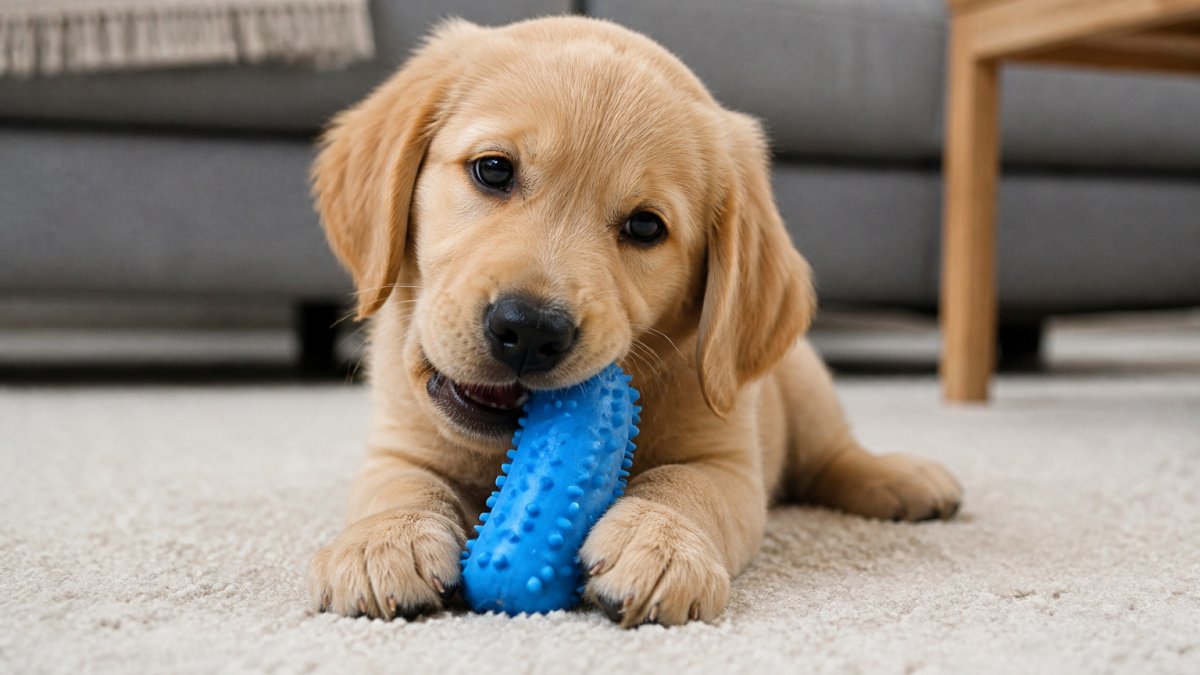
Puppies lacking appropriate chewing outlets often develop destructive behaviors, chewing furniture, shoes, and household items not out of spite but because of an unmet biological need. The right toys prevent this cycle and build confidence as puppies learn to satisfy their urges within boundaries you've set.
Interactive chewing also reduces anxiety and boredom, contributing to a more balanced, confident adult dog.
Safe Chew Toys for Puppies: What to Look For
Selecting safe chew toys for puppies is less about one perfect product and more about matching construction, material, and size to your puppy's mouth and chewing style. A toy safe for a 10-week-old gentle nibbler can be a serious hazard for a 5-month-old power chewer.
Material and construction checks
- Rubber and natural rubber compounds: The safest baseline for teething puppies. Look for solid, seamless construction with no glued-on pieces. Rubber flexes under pressure instead of cracking, which reduces the chance of sharp fragments.
- Durable plush and fabric: Acceptable for gentle chewers and comfort-seeking puppies, but only if seams are double-stitched and there are no plastic eyes, bells, or squeakers that can be pulled out. Treat plush as a supervised toy, not a crate toy.
- Nylon and hard composite chews: Appropriate for determined chewers, but inspect regularly for rough edges, cracks, and worn-down nubs. Once a nylon toy develops sharp ridges, retire it.
- Avoid: Toys with loose seams, removable parts, squeakers accessible through thin fabric, rope that frays into long strands, and any material that splinters, flakes, or breaks into small pieces. Also avoid cooked bones, antlers marketed without size guidance, and toys smaller than your puppy's mouth.
Size and shape rules
A toy should be large enough that your puppy cannot fit it fully into the back of the mouth, at least as long as the muzzle and wide enough that it cannot be swallowed whole.
Toy-type hazard map
| Toy type | Main hazard | Supervision level |
|---|---|---|
| Plush and squeaky toys | Squeaker removal, stuffing ingestion, seam tears | Supervised only; inspect after every session |
| Rubber chew toys | Cracking at stress points, small torn pieces | Supervised initially, then independent if intact |
| Nylon and hard chews | Sharp edges, worn nubs, fractured pieces | Supervised; replace at first sign of wear |
| Rope and tug toys | Frayed strands, swallowed fibers | Supervised; discard when frayed |
| Treat-dispensing and puzzle toys | Removable caps, small treat fragments, jammed pieces | Supervised until your puppy's technique is known |
Supervision and inspection routine
Always supervise the first several sessions with any new toy. Watch whether your puppy chews gently, shakes and whips the toy, or tries to tear it apart; that tells you whether it belongs in the supervised-only or independent-play bin. Inspect after each session: flex the toy, check seams and edges, and look for missing pieces.
Matching safety to your puppy's stage
A 3-to-4-month-old puppy in the middle of teething needs softer, flexible rubber and fabric toys that soothe sore gums. By 5 to 6 months, as jaw strength increases and adult teeth emerge, introduce firmer rubber and nylon chews, but only after watching how your puppy handles softer toys.
Durable Puppy Chew Toys for Aggressive Chewers
Some puppies are intense chewers from day one. These power chewers need toys engineered to withstand sustained force without breaking into dangerous fragments, and owners who can tell genuinely durable toys from merely marketed ones.
Durability tiers for power-chewing puppies
- Tier 1, Soft rubber and plush: Fine for gentle chewers, but a determined puppy can destroy these in minutes. Use for supervised comfort and training, not as a primary chew outlet.
- Tier 2, Firm rubber and reinforced fabric: Better for moderate chewers. Look for thick walls, seamless molding, and no removable parts. Expect weeks to a few months of life depending on the puppy.
- Tier 3, Nylon and hard composite: The workhorse tier for aggressive chewers. These toys resist tearing and provide long chew sessions, but they wear down at the ends and need regular inspection.
- Tier 4, Dual-material and veterinary-recommended chews: Combine a hard outer layer with a softer center to keep engagement high while extending lifespan. These are the closest match for puppies that destroy Tier 2 toys within days.
What to look for in a power-chewer toy
Look for solid, seamless construction, a size large enough that the toy cannot be swallowed, and textures that give the jaw something to work against without splintering. Dental nubs and ridges keep the toy interesting and support oral health.
A structured progression for aggressive chewers
Start with a Tier 3 or Tier 4 toy and supervise the first few sessions. If your puppy loses interest quickly, add a treat-dispensing element or rotate the toy out for a day.
Double Action Power Chew Durable Dog Toy Bacon X-Large/Souper (1 Count) →
Budget and value comparison
Price alone does not tell you value. A $9.95 plush toy that lasts a week costs more per month than a $35.93 dual-material chew that lasts three months. Divide the price by the realistic lifespan for your puppy's chewing style, and factor in refill and replacement costs.
| Toy tier | Typical price range | Realistic lifespan for a power chewer | Best use |
|---|---|---|---|
| Tier 1, Soft rubber/plush | $9.95-$14.95 | Days to a few weeks | Supervised comfort and training |
| Tier 2, Firm rubber | $14.95-$24.95 | Weeks to a few months | Moderate chew sessions |
| Tier 3, Nylon/hard composite | $19.95-$29.95 | Months | Long chew sessions |
| Tier 4, Dual-material | $29.95-$39.95 | Months, with inspection | Primary chew outlet for aggressive chewers |
Example product in the Tier 4 range
The Double Action Power Chew Durable Dog Toy ($35.93) fits the Tier 4 profile: durable nylon with a soft rubber center creates multiple textures that maintain engagement through different chewing intensities. Dental nubs throughout help reduce plaque and tartar.

When Do Puppies Stop Teething and Chewing
Puppies begin losing baby teeth around 3 to 4 months of age, accelerating between 4 and 6 months. By 6 to 7 months, most have transitioned to adult teeth, and teething discomfort diminishes significantly, though chewing simply changes in character.
Adult dogs continue chewing throughout their lives, though intensity typically decreases after the first year. The biological drive remains, but it's no longer driven by the acute discomfort of emerging teeth.
Some dogs maintain strong chewing drives into adulthood, while others lose interest in toys altogether. Breed, temperament, and early enrichment all influence this. Providing appropriate outlets throughout life, not just during puppyhood, prevents boredom-related destructive behaviors.
How to Stop Puppy Chewing Furniture and Redirect the Behavior
When puppies chew furniture, they're not being destructive out of malice, they're following instincts in the absence of better alternatives. Stopping this requires prevention and active redirection.
Remove Temptation: Limit access to furniture and household items your puppy targets. Use baby gates to restrict rooms with fabric furniture, and spray bitter deterrents on furniture legs and baseboards. This isn't punishment; it's prevention.
Establish Designated Chewing Zones: Create a specific area where chewing is encouraged and rewarded. When your puppy chews appropriate toys there, praise enthusiastically and offer high-value treats, teaching where chewing is acceptable.
Redirect Immediately: When you catch your puppy chewing furniture, gently interrupt with a calm "no" and immediately redirect them to an appropriate toy.
Increase Exercise and Mental Stimulation: Puppies with insufficient activity and mental engagement chew more out of boredom. Increase playtime, introduce puzzle toys, and vary their environment.
Supervise Closely: During the teething phase, constant supervision prevents destructive chewing from becoming a habit. When you can't watch your puppy, confine them to a safe space with appropriate toys.
Redirection works because it satisfies the underlying need while teaching appropriate outlets. Channel those drives toward toys, and furniture chewing typically resolves naturally.
Comparison Table: Durable Chew Toys for Teething Puppies
| Toy | Price | Best For | Key Feature | Durability |
|---|---|---|---|---|
| Squeaky Animal Plush Toys | $9.95 | Small to medium puppies, gentle chewers | Squeaker + molar cleaning texture | Moderate |
| Dog Dental Chew Stick | $19.95 | Small to medium dogs, dental care focus | 3-in-1 (toothbrush, chew toy, gum massager) | High |
| Double Action Power Chew | $35.93 | Large breed puppies, aggressive chewers | Dual-texture nylon + rubber, dental nubs | Very High |
Conclusion
Finding the best durable chew toys for teething puppies requires matching the toy to your puppy's size, chewing intensity, and developmental stage. Puppies chew because it's biologically necessary, your job is to provide safe, engaging outlets that satisfy that need while protecting your home.

At PetNest Market, we've curated a selection of toys specifically designed to support healthy teething while building positive chewing habits. Our Squeaky Animal Plush Toys offer affordable engagement for gentle chewers, while the Double Action Power Chew delivers the extreme durability aggressive chewers demand. For puppies where dental health is a priority, the Dog Dental Chew Stick combines chewing satisfaction with oral care benefits. With our Quality Guaranteed promise and free shipping on orders over $50, you can invest in the right toys with confidence.
Frequently Asked Questions
What makes a chew toy safe for teething puppies?
Safe chew toys for puppies should be made from non-toxic materials, free of removable parts that could cause choking, and appropriately sized for your puppy's mouth. Look for toys with smooth edges, no sharp points, and durable construction that won't splinter or break apart. Avoid toys with loose squeakers, small buttons, or thin plastic that tears easily. Always supervise playtime and inspect toys regularly for wear.
How long should puppies chew on toys each day?
Puppies typically benefit from 15-30 minutes of focused chewing sessions, several times throughout the day. During peak teething (around 3-6 months), more frequent shorter sessions help soothe sore gums. Rotate toys to maintain engagement and prevent boredom. Avoid extended unsupervised chewing sessions, especially with new toys, until you're confident the toy is completely safe for your puppy.
When do puppies stop teething and need fewer chew toys?
Most puppies stop teething around 6-7 months of age, when their adult teeth are fully erupted. However, puppies continue to enjoy chewing well into adulthood as a natural behavior. After teething ends, you can transition to a mix of durable chew toys and interactive puzzle toys. Even adult dogs benefit from appropriate chewing outlets, so maintaining a rotation of safe, engaging toys supports lifelong healthy chewing habits.
Can I use the same chew toy for my aggressive chewer puppy as a gentle chewer?
No. Aggressive chewers need durable puppy chew toys specifically designed to withstand intense chewing pressure. Standard plush toys or soft rubber toys will be destroyed quickly and pose choking hazards. Look for toys made from reinforced nylon, heavy-duty rubber, or textured materials rated for power chewers. The Double Action Power Chew ($35.93) is designed for dogs 50 lbs and over with aggressive chewing styles and features dental nubs for oral health.