

Table of Contents
- Expensive Pet Beds vs. Budget Options: What Actually Differs
- How Much to Spend on a Dog Bed: A Cost Framework
- Cheap vs. Expensive Dog Beds: Durability and Lifespan
- Best Orthopedic Dog Bed Features and Real Benefits
- Washable Dog Beds: Maintenance Costs Over Time
- Lifetime Cost Comparison: Premium Beds vs. Frequent Replacements
- Who Benefits Most From Premium Pet Beds
- Conclusion
- Frequently Asked Questions
Last Updated: October 13, 2026
Expensive Pet Beds vs. Budget Options: What Actually Differs
The difference between a cheap pet bed and an expensive one isn't always obvious until you're replacing the cheap one for the third time in two years. The answer to whether expensive pet beds are worth it depends on what you're actually comparing.

A cheap pet bed might cost between $15 and $25. An expensive pet bed typically runs $40 and up. But price alone doesn't tell you what you're getting. The real differences show up in three places: how long the bed lasts, how well it supports your pet's body, and how much hassle it creates for you over time.
Budget beds often use thin foam that compresses quickly. The fabric tears easily when dogs dig or cats knead. Zippers fail. Seams split. You're replacing them every 12 to 18 months. Premium beds use denser foam, reinforced stitching, and fabrics that resist wear. They last three to five years or longer.
That's the core trade-off: spend more upfront or spend less frequently. Which actually costs less depends on your dog, your cat, and how long you plan to keep them.
How Much to Spend on a Dog Bed: A Cost Framework
How much should you actually spend? The answer isn't a single number, it's a decision tree based on your pet's age, size, and behavior.
For puppies and young adult dogs under age 5: A mid-range bed around $30 to $50 makes sense. Your dog is still learning not to destroy things, so investing heavily in a premium bed is premature.
For senior dogs or dogs with joint problems: Spend $50 to $100 or more. Orthopedic support matters here. A cheap bed with thin foam won't help arthritic joints the way a quality memory foam bed does.
For heavy chewers or destructive dogs: Budget for replacement. A $40 bed that lasts two years beats a $80 bed that gets destroyed in six months. Accept that you'll replace it and pick something durable but not premium-priced.
For cats: Most cats don't need expensive beds. They're lighter, less destructive, and often prefer smaller, enclosed spaces. The Humane Society guidelines on cat enrichment note that cats value comfort and security over luxury.
The real cost framework isn't about the price tag, it's about expected lifespan divided into annual cost. A $60 bed that lasts five years costs $12 per year.
Cheap vs. Expensive Dog Beds: Durability and Lifespan
Durability is where the price difference becomes real. Budget pet beds fail in predictable ways.
The foam compresses first. Within months, a cheap bed feels flat. Dogs stop using it because there's no cushioning left. The fabric wears thin in high-contact areas, where your dog's hip rests, where they dig to get comfortable.
Expensive beds use multiple layers of foam with different densities. The bottom layer is firm for support. The middle layer is softer for comfort. The top layer resists wear. This layering keeps the bed feeling supportive for years.
Construction quality matters too. Budget beds often use single-stitch seams that fail when stressed. Premium beds use double or triple stitching in high-stress areas. Zippers on expensive beds are industrial-grade. They don't jam.
The difference shows up in real time. A dog on a cheap bed that's already compressed gets less support than a dog on a quality bed.
According to veterinary research on pet orthopedics, proper support during sleep reduces strain on joints and can slow the progression of arthritis in senior dogs. A bed that maintains its structure delivers that benefit.
| Metric | Budget Bed | Expensive Bed |
|---|---|---|
| Foam density | Low (compresses quickly) | High (maintains shape) |
| Fabric durability | Thin, prone to tearing | Heavy denier, tear-resistant |
| Seam construction | Single stitch | Double or triple stitch |
| Expected lifespan | 12-18 months | 3-5+ years |
| Annual cost (5-year scenario) | $20-30/year | $12-20/year |
Best Orthopedic Dog Bed Features and Real Benefits
Orthopedic beds are marketed heavily, but what actually matters?
True orthopedic support comes from memory foam, which conforms to your dog's body and distributes pressure evenly. This reduces pressure points on joints and bones. For senior dogs or dogs with arthritis, this is genuinely helpful. For young, healthy dogs, it's a nice-to-have, not essential.
The key feature is foam density. Memory foam rated at 5 pounds per cubic foot or higher provides real support. Cheap "orthopedic" beds sometimes use thin memory foam over cheap base foam. The memory foam layer is so thin it doesn't matter.
Look for beds with at least 2 to 3 inches of quality foam. Measure the total thickness. Cheap beds are often 3 to 4 inches thick total, but half of that is just the cover and bottom layer.
Washability matters more than people think. A bed that can't be cleaned easily gets smelly. If the cover isn't removable and machine washable, you're stuck spot-cleaning it or replacing it.
Temperature regulation is another real benefit. Some premium beds use cooling gel or breathable fabrics. Others use wool or cotton that regulates temperature naturally. For dogs that overheat easily, this prevents them from abandoning the bed in summer.
Washable Dog Beds: Maintenance Costs Over Time
A bed that can't be cleaned easily isn't worth buying, regardless of price.
Premium Felt Cat Bed Cave (Medium) - Handmade 100% Merino Wool Bed for Cats →
Cheap beds often have covers that are sewn on permanently. You can't wash them properly. You spot-clean, and the bed gets progressively grimier. After a year, it smells and looks bad even though the foam might be fine. You replace it because you have to, not because it's actually worn out.
Expensive beds almost always have removable, machine-washable covers. Some also have removable foam. This changes everything. You can wash the cover every two weeks. The foam stays clean longer. The bed stays fresh and hygienic for years.
Washing extends lifespan significantly. A bed that gets washed regularly stays usable longer than one that gets spot-cleaned. The cover doesn't degrade as fast because you're not scrubbing it with harsh spot-cleaners.
For pet owners with multiple dogs, cats, or anyone dealing with accidents or shedding, washability isn't a luxury, it's the difference between a bed that lasts and one that becomes unusable. The Original Pet Cot Replacement Cover is machine washable and can even be hosed off outdoors, which means you can actually keep it clean without constant effort.

Lifetime Cost Comparison: Premium Beds vs. Frequent Replacements
Let's do the actual math, because this is where the decision becomes clear.
Scenario 1: Budget Bed Replacement Cycle
- Buy a $25 bed
- It lasts 14 months
- Replace it with another $25 bed
- Over 5 years: 3 to 4 replacements = $75 to $100 spent
- Annual cost: $15 to $20 per year
Scenario 2: Mid-Range Bed
- Buy a $50 bed
- It lasts 3 years
- Replace it with another $50 bed
- Over 5 years: 1 to 2 replacements = $50 to $100 spent
- Annual cost: $10 to $20 per year
Scenario 3: Premium Bed
- Buy an $80 bed
- It lasts 5 years
- Over 5 years: 1 purchase = $80 spent
- Annual cost: $16 per year
The lifetime cost is often similar. But there's a hidden cost in the budget scenario: your time and effort. You're shopping for a new bed every 14 months. You're breaking in a new bed repeatedly. Your dog is adjusting to a different sleeping surface. That has a cost too, even if it's not financial.
For most pet owners, a mid-range bed ($40 to $60) hits the sweet spot. It lasts long enough to justify the upfront cost. It's not so expensive that you feel wasteful if your dog doesn't like it. It has real quality improvements over budget options without the premium markup.
Who Benefits Most From Premium Pet Beds
Not every pet owner needs an expensive bed. But some absolutely do.
Senior dogs benefit most. A dog over age 10 spends 15 to 18 hours a day sleeping. The American Veterinary Medical Association on senior pet care emphasizes that comfort and support become increasingly important as dogs age.
Large breed dogs benefit. Bigger dogs put more pressure on a bed. They compress cheap foam faster. A 90-pound dog on a thin budget bed is resting on flattened foam by month two.
Dogs with joint problems benefit. Any dog with arthritis, hip dysplasia, or other joint issues needs real support. Cheap beds don't provide it.
Pet owners with multiple pets benefit. If you have two or three dogs, a quality bed that lasts five years is cheaper than replacing budget beds multiple times. The math works in your favor.
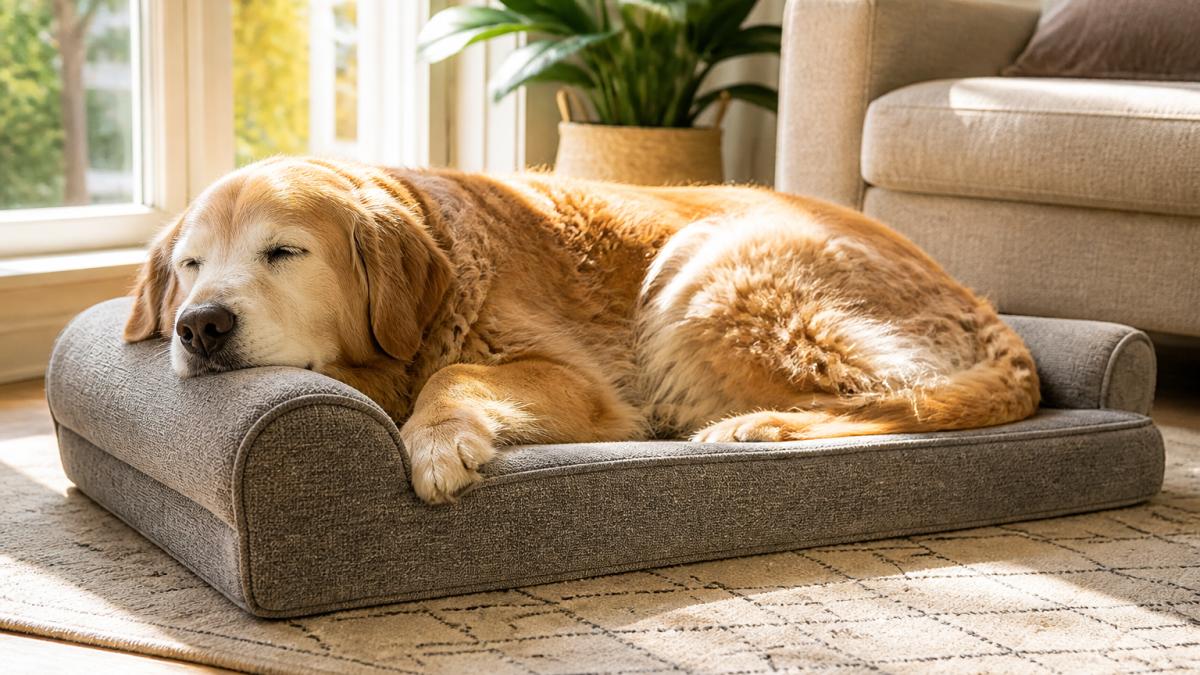
Pet owners who value cleanliness benefit. If you have dogs that shed heavily, get muddy, or have accidents, a bed with a removable, machine-washable cover is essential.
For everyone else, young, healthy dogs; cats; pet owners who move frequently or aren't sure about long-term pet ownership, a mid-range bed is usually the right choice.
Conclusion
Are expensive pet beds worth it? Yes, but only if you buy the right price point for your situation. A mid-range bed ($40 to $60) with a removable, washable cover and quality foam will outlast multiple cheap beds and cost less over time. For senior dogs or dogs with joint problems, a premium orthopedic bed is worth the investment because it genuinely improves their quality of life.
The mistake most pet owners make is buying the cheapest option and replacing it repeatedly, or overspending on premium features their pet doesn't need. We recommend matching the bed to your dog's age, size, and health status, not just your budget. The Rectangle Bolster Pet Bed offers orthopedic support with a removable cover at a mid-range price, making it practical for dogs that need real support without the premium markup. With our Quality Guaranteed promise, you can invest with confidence knowing we stand behind every product we recommend.
Frequently Asked Questions
How much should you spend on a dog bed?
The right amount depends on your dog's age, size, and health needs. Budget beds run $20-40 and last 1-2 years. Mid-range orthopedic options cost $35-65 and typically last 3-4 years. Premium beds with advanced foam and durable covers range from $60-100+ and can last 5+ years. For an older dog or one with joint issues, investing $50-80 in a quality orthopedic bed often saves money on replacements and vet visits compared to cycling through cheaper options.
Are expensive dog beds more durable than cheap ones?
Yes, generally. Premium beds use higher-density foam, reinforced stitching, and tear-resistant fabrics that withstand wear, washing, and chewing better than budget alternatives. A cheap bed may flatten or develop holes within a year, while an expensive orthopedic bed with quality construction can remain supportive for 5+ years. The difference is most noticeable in dogs that chew, dig, or spend long hours in their bed. However, durability also depends on the specific product, not every expensive bed outlasts every cheap one.
Do dogs actually prefer orthopedic beds?
Dogs don't inherently prefer orthopedic beds, but they benefit from them. Orthopedic foam reduces pressure on joints and bones, which matters most for senior dogs, large breeds, and dogs with arthritis. Younger, healthy dogs may be equally comfortable on a basic bed. The real advantage is that orthopedic support can prevent or slow joint deterioration and improve sleep quality, especially in dogs over 7 years old or those with existing joint problems. If your dog seems to avoid their bed or shifts positions frequently, a firmer orthopedic option may help.
What makes expensive pet beds worth the cost?
Premium beds justify their price through better materials (high-density memory foam, natural wool), construction quality (double stitching, reinforced seams), washability (removable, machine-washable covers), and longevity (5+ years vs. 1-2 years). They also often include features like non-slip bases, orthopedic support for joint health, and temperature regulation. When you calculate cost-per-year, a $70 bed lasting 5 years costs $14/year, while a $25 bed lasting 1 year costs $25/year. For dogs with joint issues or heavy use, the investment reduces replacement frequency and supports better health.